

Cloud security giant Wiz has analyzed GitHub repositories pertaining to the world’s largest AI companies and found that many had leaked verified secrets that could expose sensitive information.
Leaked secrets are often discovered by GitHub’s own scanners, scans conducted by the repository owners, and automated scans performed by third parties for marketing purposes.
The cloud security firm wanted to take a different approach in its secrets sprawl study and performed deeper scans that targeted full commit history, commit history on forks, deleted forks, workflow logs, and gists.
Wiz’s scans also covered members and contributors of the core organization that could inadvertently expose company secrets in their own public repositories. In addition, the scans targeted less common AI-related secrets that may be missed by traditional scanners.
Wiz’s analysis, focusing on the AI companies in the Forbes AI 50 list, showed that 65% of the firms with a GitHub footprint had leaked secrets. “In total, the companies with verified secret leaks are valued at over $400B,” Wiz noted.
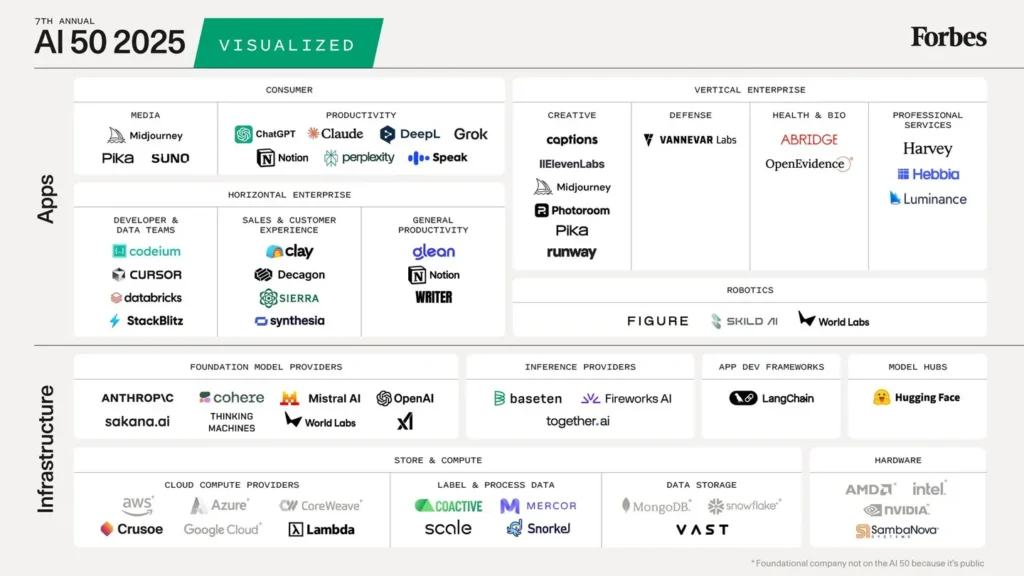
The types of leaked secrets included API keys, tokens, and credentials, including ones associated with Google API, Weights & Biases, Flickr, Infura, ElevenLabs, and Hugging Face.
Some of the leaked secrets could have exposed private models, training data, and organizational structures.
The impacted AI companies were notified. Firms such as ElevenLabs and Langchain were applauded for their fast response. However, Wiz said nearly half of its disclosures did not reach the vendor or received no response.
“Many companies lacked an official disclosure channel, failed to reply, and/or failed to resolve the issue,” Wiz said.
The security firm also highlighted some interesting findings. One company that did not have any public repositories and roughly a dozen organization members had been leaking secrets. On the other hand, a company with 60 public repositories and 28 organization members had no exposed secrets, which Wiz believes is indicative of effective secrets management.
Wiz has advised AI companies — the recommendations apply to other types of organizations as well — to prevent secrets sprawl by mandating public VCS secret scanning, establishing disclosure channels to make it easier for third parties to report secret leaks, and prioritizing detection for proprietary secret types.
Related: Truffle Security Raises $25 Million for Secret Scanning Engine
Related: GitHub Workflows Attack Affects Hundreds of Repos, Thousands of Secrets
Related: Over 6,700 Private Repositories Made Public in Nx Supply Chain Attack





